
Soil Biology Diagnostics - Know Before You Amend
Your soil’s success depends on what’s actually living in it — not just numbers on a fertility report. Accurately understanding the biology guides us where to go next.
We offer Soil Foodweb School-standaridized microscope analysis.
We count and qualify:
-
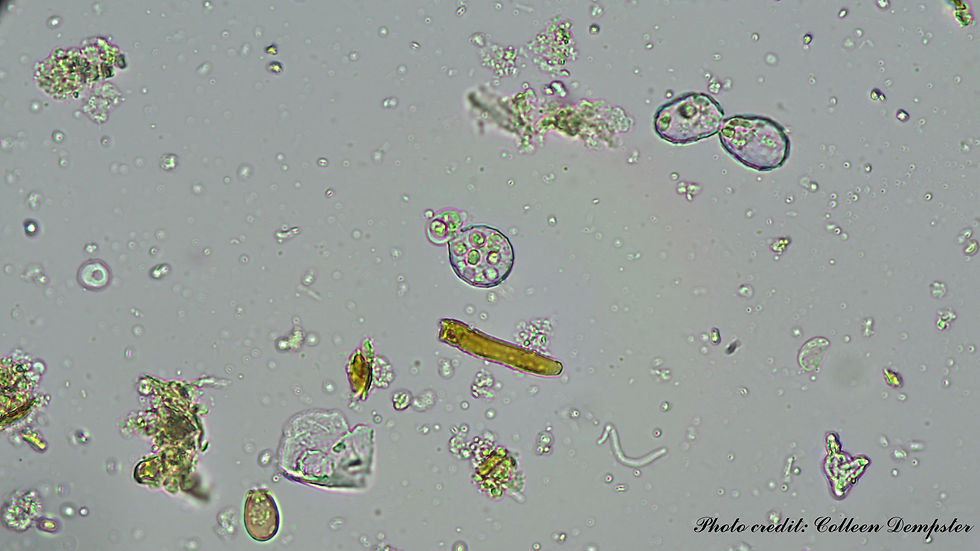
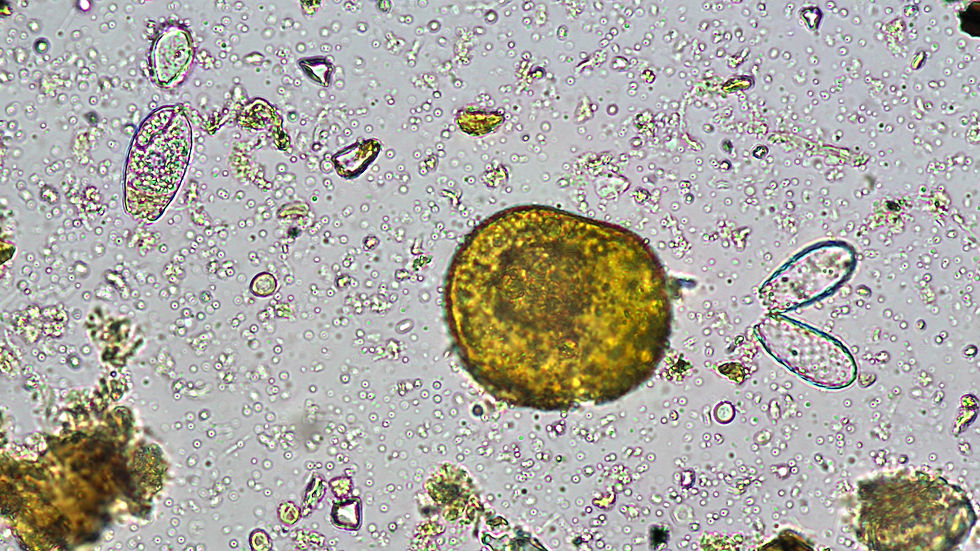
Fungi, bacteria, protists, and nematodes
-
Fungal : bacterial ratios
-
Functional organism groups
-
Biological indicators of soil health and risk
You get interpretation and recommendations matched to your crops and goals — not just raw data.


Diagnostics options
-
SFW Microbial Reports — Detailed counts and comparison to healthy benchmarks. What you'll get:
-
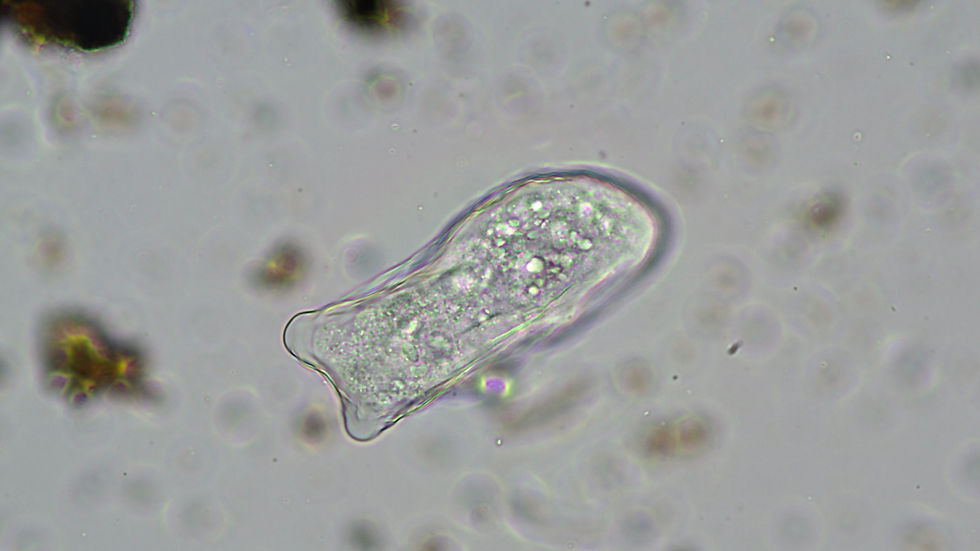
Microscopy images
-
Interpretation against Dr. Ingham's "Recommended Ranges" for different plant successional stages
-
A comparison with where your soil/compost sits compared to Ontario averages, and
-
Recommended next steps
-
-
Quick Check — Presence/absence of key soil life (+ basic notes)
-
Microbiometer Testing — Fungal Biomass, Bacterial Biomass, and F:B ratio in 30 minutes. Add this to a site-visit or same-day shipping.
-
Basic Soil Test Package through A&L Labs - % Organic Matter, soil pH, Phosphorus (Sodium Bicarb and Bray P1), Potassium, magnesium, calcium, sodium, aluminum, saturation of cation elements, Cation Exchange Capacity, %P saturation, K:Mg ratio. +$40 when you add to a SFW microbial report.




Schedule your Microbial Analysis here:
 From 80 Canadian dollars
 30 Canadian dollars
 120 Canadian dollars
 30 Canadian dollars
Meet the Microbes:
Total Bactera
Bacteria consume organic matter and hold it in their bodies (thus storing carbon in the soil). They are big contributors of nitrogen to plant roots, and can even "fix" nitrogen from the atmosphere. In disturbed soils, bacteria are the first organisms to colonize.
Fungal to Bacterial Ratio (F:B)
The F:B ratio should match the successional stage of the plant(s) you are trying to grow. Generally, grasses require more bacteria (F:B < 1) and trees require more fungi (F:B > 1). A coniferous forest can have a F:B of 100 - 1000! But it takes time and care to grow fungi, and so most urban soils have very low F:B ratios.
Nematodes
Nematodes are differentiated by their mouth parts. Bacterial feeders are the most common, because soil is usually bacteria-dominated. The other functional groups are fungal feeders, omnivores, predators, and root feeders. It is especially important to identify root feeders, as they can result in mass crop loss. Predators eat root-feeders!
Total Fungi
Fungi and bacteria are primary consumers in the soil food web. While bacteria make microaggregates, fungi make macroaggregates in the soil. Aggregates hold water and oxygen, and are needed for healthy plants. Fungi form symbiotic relationships with plant roots, especially woody plants, which help plants obtain essential nutrients.
Protists
Protists are important consumers of bacteria and fungi. They are also important food sources for nematodes and microarthropods, and help cycle nutrients. The three main types of protists found in soils are flagellates, amoeba, and ciliates. Flagellates and amoeba are beneficial; ciliates let you know if your soils are going anaerobic.
Oomycetes
Oomycetes are a fungus-like filamentous organism that can manifast as a pathogen in soil and leaf surfaces.
Well-known examples of oomycetes, also known as water molds, are late blight (Phytophthora), downy mildew, Pythium, and root rot.

Rewild Soils Lab is an active Soil Food Web Laboratory since 2022, operated by certified lab. tech. Colleen Dempster. Colleen regularly conducts assessments on soil, compost, and compost tea/extracts.
With a database of over 350 documented analyses, Rewild Soils is well-poised to advise you on where your soil/product stands in relation to other Ontario soils/products, and in relation to Dr. Elaine Ingham's recommended ranges.
Our lab respects confidentality. Your business/name will not be shared, but we do ask for your permission to use certain metrics (soil type, compost type, and raw data) for education and outreach purposes (see "Data Use Agreement" below).